First Time on a Philadelphia Helicopter Ride: What to Expect, Step by Step
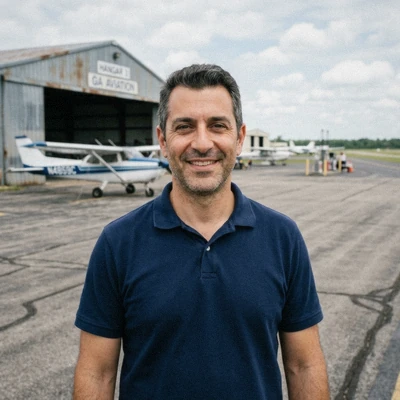
You don't need any flying experience to take your first helicopter ride in Philadelphia. The pilot handles every technical part of the flight, and check-in walks you through the rest before the rotors ever turn. On my own first flight out of Northeast Philadelphia Airport, I was nervous about one specific thing, the takeoff itself, that sudden lift when the skids leave the tarmac, worried it would feel like a drop rather than a climb. Ten seconds after liftoff, headset crackling with the pilot's voice, that worry was gone entirely. What follows is the exact walkthrough: check-in, the weigh-in, the briefing, what liftoff actually feels like, and how to get a photo worth keeping through the glass.
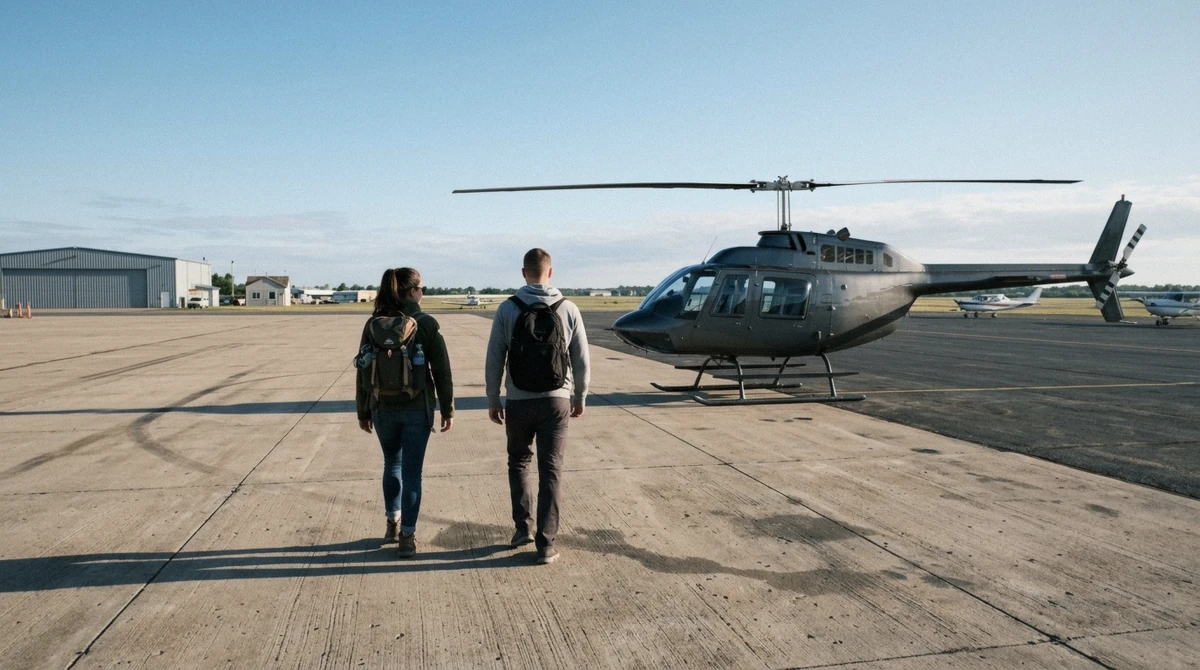
Quick answer
No experience is needed for a Philadelphia helicopter tour. The pilot handles the aircraft entirely, the ground crew explains everything else at check-in, and the whole visit, door to door, runs 35 to 60 minutes. The one thing every first-timer should know going in is that you'll be weighed at check-in, and that's routine, not a judgment call.
Key takeaways
- No experience is needed. The flight itself is fully pilot-operated, and the ground crew explains everything else at check-in.
- Check-in happens at Northeast Philadelphia Airport, 9800 Ashton Rd, about 25 to 30 minutes from Center City by car.
- Every passenger is weighed at check-in. It's standard procedure tied to seat assignment, not a judgment on anyone.
- Plan 35 to 60 minutes total, from walking in the door to walking back to the parking lot.
- The single biggest first-flight nerve is the takeoff itself, and it resolves within seconds for almost everyone.
- Routes and pricing vary by distance. See what each route costs before deciding which one to book.
Do You Need Any Experience?
You need none. Every Philadelphia helicopter tour with MyFlight Tours is fully pilot-operated: the pilot flies the aircraft, reads the instruments, and makes every technical call in the air. Your job is to show up, listen to a short briefing, and enjoy the view. There is no yoke to hold, no controls to learn, and nothing you are expected to know before arriving.
The one thing that surprises first-timers is how little preparation the flight actually requires. You don't need aviation vocabulary, you don't need to have flown in a small aircraft before, and you don't need any particular fitness beyond climbing into a small cabin over a skid and sitting for the length of the flight. If stepping up into a compact cabin sounds like the hardest part of the day, that assessment is roughly correct, it is.
Anyone with a mobility limitation that makes that step difficult, or a medical condition worth checking on before booking, should read our weight limit and safety guide first, since that page covers restrictions this one doesn't.
What Happens on Your First Flight: Step by Step
Here is the exact rhythm of a first flight out of Northeast Philadelphia Airport, stage by stage.
| Stage | How long | What happens |
|---|---|---|
| Booking & the day before | a few minutes | Confirmation email arrives with the check-in window; nothing to prepare beyond the right card and ID |
| Check-in & ID | 10 to 15 minutes | Arrive at 9800 Ashton Rd, present the booking card and a matching photo ID at the desk |
| Weigh-in & briefing | 10 to 15 minutes | Each passenger steps on a scale, seats are assigned for weight and balance, headsets are fitted |
| The flight | varies by route | Quick Hop, Downtown, or Skyline route, flown at 100 to 120 mph depending on distance |
| Heading back | 10 to 15 minutes | Walk back from the tarmac to the lot; total time from check-in to exit runs 35 to 60 minutes |
Booking and the night before
The confirmation email or text names the exact check-in window. There is genuinely little to prepare beforehand beyond confirming you have the same credit or debit card used to book, since it's checked at the desk alongside a valid photo ID.
Arrival and check-in
Check-in happens at 9800 Ashton Rd, Philadelphia, PA 19114, the address for Northeast Philadelphia Airport. From I-95, exit 28 or exit 32 both get you there, and parking is free on site, so budget the drive itself at 25 to 30 minutes from Center City rather than adding time for parking. At the desk, hand over the booking card and a matching photo ID, both are required, and a mismatched name or a missing card is the most common reason a check-in runs long.
Arrive with room to spare: showing up 25 minutes late or more can mean a $25 late fee, and a late arrival eats directly into your own flight window.
The weigh-in and briefing
Every passenger is weighed at check-in. It isn't singling anyone out, it's basic aviation math: a helicopter has to be balanced front to back and side to side, and the pilot uses each passenger's weight to decide who sits where. Groups of three are sometimes split across two flights if the combined weight calls for it.
After the weigh-in, a short safety briefing covers the door, the seatbelt, and how the headset works, and every passenger is fitted with a headset carrying an intercom channel to the pilot, so questions during the flight are normal, not an interruption.
The flight itself
Once the rotors are up to speed and the pilot gives the signal, the helicopter lifts straight up before moving forward, a sensation closer to an elevator than a plane's runway roll. The Quick Hop route flies at roughly 700 feet and about 100 mph; the longer Downtown and Skyline routes climb higher and move faster. Every seat is effectively a window seat, since the cabin holds a maximum of three passengers.
Heading back
Landing is the takeoff in reverse, a controlled settle onto the tarmac rather than a bump. Walking back off the tarmac to the parking lot takes another 10 to 15 minutes, which is why the whole visit, door to door, runs 35 to 60 minutes depending on how busy check-in is when you arrive. There's no fixed tipping norm published by the operator; it's a personal call, not an expectation.
What It Actually Feels Like
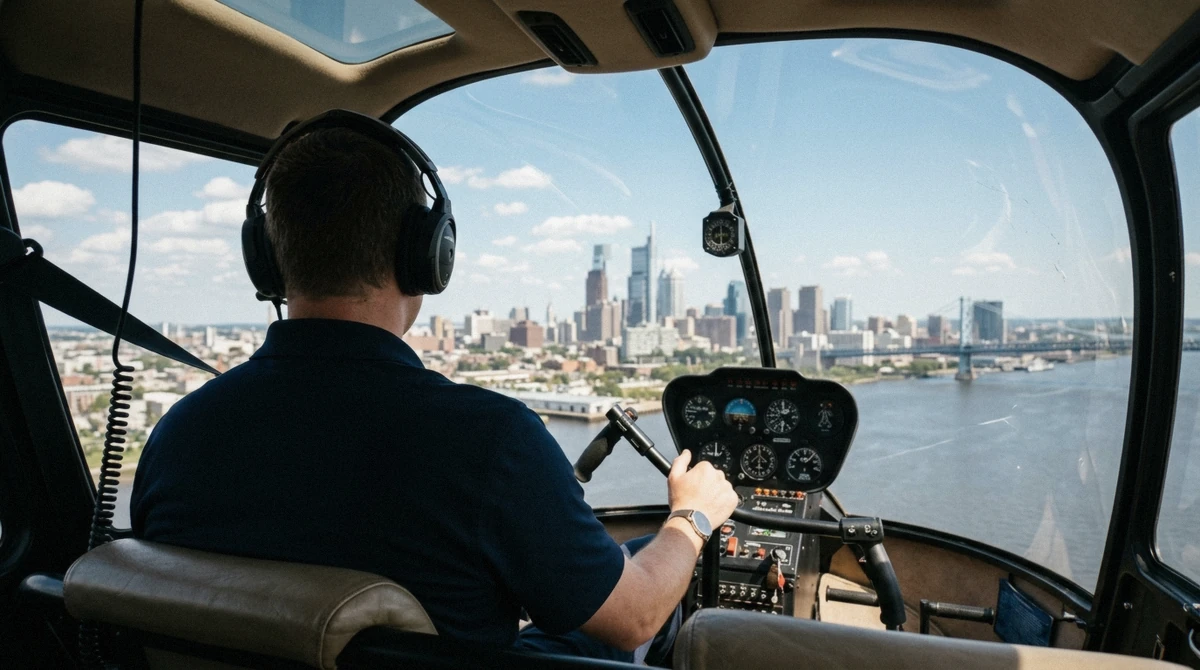
The rotor noise builds before you ever leave the ground, a low thrum that turns into a steady wall of sound once the blades reach flying speed, loud enough that the headset isn't optional, it's how the pilot and every passenger actually communicate for the rest of the flight. Liftoff itself is the moment first-timers brace for and then immediately relax about: the helicopter rises straight up a few feet before tipping gently forward, closer to a slow elevator than the stomach-drop of a plane leaving a runway.
Once level, the ride settles into something closer to a smooth car on a good highway than anything dramatic. Small course corrections feel like a mild lean rather than a jolt, and the loudest, most noticeable moment of the whole flight is usually the first thirty seconds after liftoff, not anything that happens once you're cruising. Cool air moves through the cabin, the city drops away fast, and the Delaware River on the Quick Hop route, or the skyline on the longer routes, fills the window almost immediately, there's no long climb to sit through first.
Nervous? What First-Timers Worry About
These are the worries that come up most often before a first flight, and what genuinely happens once you're in the seat.
| Worry | The reality | What helps |
|---|---|---|
| Will the takeoff feel scary or sudden? | Closer to a slow elevator lift than a stomach drop; the loudest, most noticeable moment passes within the first thirty seconds | Knowing what it actually feels like beforehand removes most of the surprise |
| Will the cabin feel cramped next to a stranger? | The cabin seats a maximum of three passengers, and every seat is a window seat with its own headset | Ask at booking about a smaller group or a private flight if it matters to you |
| What if I can't hear the pilot over the noise? | Every passenger wears a headset wired to an intercom channel, so the pilot's voice comes through clearly over the rotor noise | Speak normally into the headset mic; the intercom is built for exactly this |
| What if I'm nervous about the weigh-in? | It's routine aviation procedure tied to seat assignment, not a judgment on anyone | Every passenger on every flight goes through it the same way |
Beginner Mistakes to Avoid
During-the-flight mistakes worth knowing about ahead of time, not planning mistakes, those belong to a different page entirely.
- Arriving right at check-in time instead of with a buffer, since a full desk or a mismatched ID can eat into the window before the flight even starts
- Forgetting the booking card at home; a screenshot of the confirmation doesn't substitute for the physical card checked at the desk
- Wearing bulky jewelry or a loose scarf that catches on the headset or seatbelt during boarding
- Choosing bright white or heavily patterned clothing, which shows up as glare in most photos taken through the cabin glass
- Gripping the seat instead of looking out during the first thirty seconds of liftoff, which is exactly the moment most worth watching
- Bringing a bag or backpack that has to be stowed rather than held, since cabin space is tight with three passengers aboard
- Assuming a specific landmark is guaranteed on a shorter route; the Quick Hop, for instance, doesn't cross Center City, so check the route before expecting the skyline
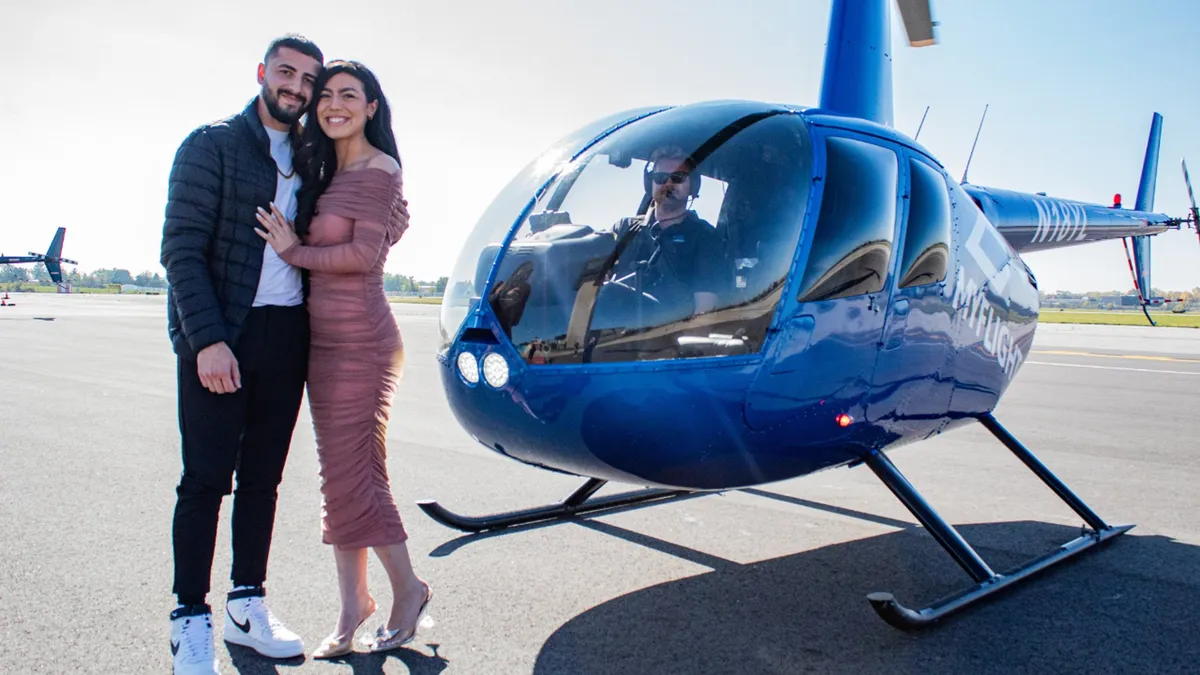
Photo Tips Through the Glass
Every photo on this flight is shot through cabin glass moving at speed, so a few habits matter more than the camera itself. Keep the lens close to the window without letting it touch the glass, contact transfers vibration straight into the shot. Plain, dark clothing cuts down on reflections far more than any lens hood would, and if the crew offers to wipe the inside of the glass at boarding, say yes, fingerprints and condensation show up more than expected once you're shooting toward bright sky. Shoot slightly downward rather than straight out, which cuts the amount of window frame and glare in the frame, and switch to burst mode once the route straightens out; at 100 mph and up, a single well-timed shot is harder to land than a short burst you pick from afterward.
A phone camera handles this fine. There's no need for a lens hood, since it presses toward the glass rather than shielding anything useful in a moving cabin, and flash should stay off entirely, it only bounces back off the window and ruins the shot. Wait for the aircraft to be past its initial climb before shooting seriously; the first minute is worth watching with your own eyes first.
Choosing Your First Route
First-timers nervous about the length of the flight, not just the takeoff, tend to do best starting with the shortest route and building confidence from there rather than committing to the full 30-mile Skyline Tour on a first booking. The Quick Hop, from $78 per person, is also the least expensive way to find out whether you want to go longer next time.
Which Route Fits a First Flight?
If you're nervous about being in the air for a long stretch
the shortest route, flown lower and faster to complete
If you want the downtown skyline in your first flight
the mid-length route that adds Center City to the river crossing
If you're celebrating something and want the full experience
the longest route, covering both rivers and the skyline together
If you're bringing a nervous flyer along
the shortest route, booked for a morning slot when the air is calmest
Frequently Asked Questions
Do you need any flying experience for a Philadelphia helicopter tour?
No. The flight is fully pilot-operated, and the pre-flight briefing covers everything you need before takeoff.
What happens at check-in before the flight?
You arrive at 9800 Ashton Rd, hand over the booking card and a matching photo ID, get weighed, and go through a short safety briefing before boarding. Plan 35 to 60 minutes total from arrival to walking back to your car.
What does helicopter takeoff actually feel like?
Closer to a slow elevator lift than a plane's runway roll. The helicopter rises straight up before moving forward, and the loudest, most noticeable moment passes within the first thirty seconds.
Where do passengers sit in the helicopter?
Seats are assigned by the pilot for weight and balance at check-in, not by request. With a maximum of three passengers, every seat is effectively a window seat.
Should I bring a real camera or just use my phone?
A phone works fine for this flight. Keep the lens close to the glass without touching it, and skip anything built for underwater use, none of that applies to a fast-moving cabin shot.
Will the safety briefing be in English?
Yes, the standard briefing at check-in is given in English. If English isn't your first language, it's worth asking the operator in advance whether a written summary is available.
How far ahead should I book my first flight?
A few days ahead is usually enough to get a good slot, though weekend mornings fill first, so book earlier if a specific date matters to you.
Nothing about a first Philadelphia helicopter ride requires experience, special fitness, or gear you don't already own. The nerves that show up beforehand, the takeoff, the weigh-in, not knowing where to sit, tend to fade within the first thirty seconds off the ground. Start with the helicopter tour we reviewed for the full breakdown of all three routes before deciding which one to book, or check today's slots directly on the flight itself.